
Senior pets need a little extra care
Finding a new lump or growth on your pet can be scary. It is also one of the most common health concerns that pets face. Not every growth is cancerous or needs to be removed – but they should all be evaluated and discussed with a veterinarian (even if they have been around for a long time)!
Here are some steps that can be taken to further evaluate that growth:
1. Fine Needle Aspiration
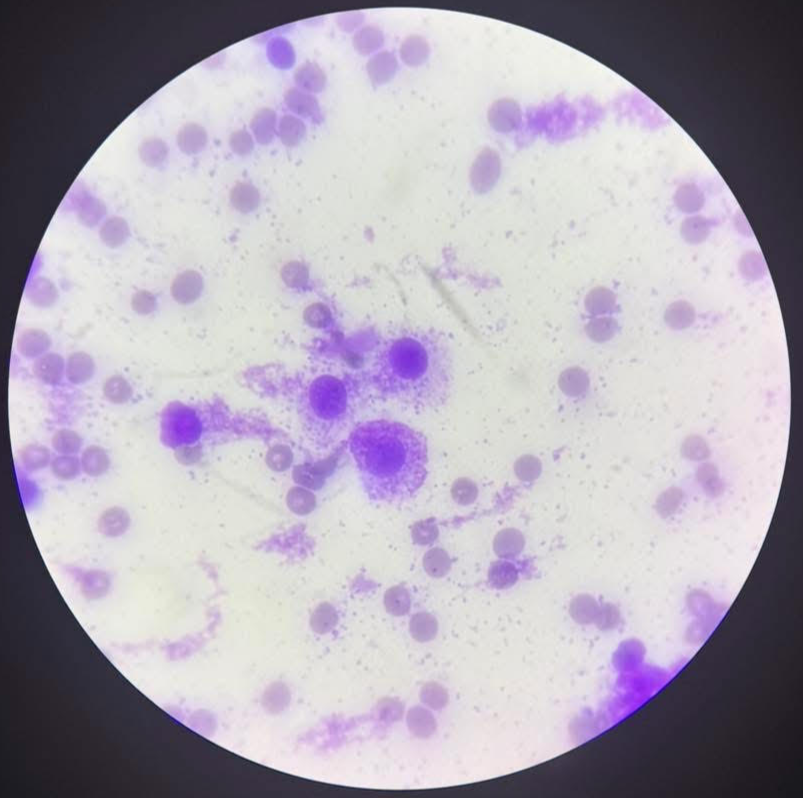
This is a procedure where a small needle is inserted into the growth or tumor and some cells are collected to put on a microscope slide for evaluation. We are often able to identify the type or at least the class of tumor with this technique. However, sometimes we are not able to identify the tumor with this technique alone.
2. Surgical Removal and Biopsy of masses
Surgical removal and biopsy of masses would be recommended for most growths/masses. Submitting the growths for biopsy to the lab is the most definitive way to identify a tumor and determine if it is cancerous or not. Most of the time pets require general anesthesia for removal of masses, but for some dogs and tumors – sedation with local anesthesia may be an option!
3. Further monitoring or treatment dependent on tumor type
Depending on the results of the biopsy, no further treatment may be necessary. You may just have to monitor for any regrowth. However, for malignant tumors, a veterinarian may recommend diagnostic imaging, sampling lymph nodes, chemotherapy, or consultation with a veterinary oncologist.
Special Note: Some pets have benign tumors such as a lipoma (benign fatty growths) that have grown to a point where they are uncomfortable for the pet or affecting their mobility – where removing them can be therapeutic even if it is not cancerous!
Stelfonta
A Non-Surgical Option for Mast Cell Tumors.
If your pet has recently been diagnosed with a mast cell tumor – you likely have discussed surgery to remove the tumor. Did you know – some mast cell tumors can be removed without surgery? Removal can be done with an injection called Stelfonta.
The medication is injected into the tumor which begins breaking down the tumor cell walls. Eventually the tumor will detach from the surrounding healthy tissue and there will be a temporary wound where the tumor was. These wounds generally heal well without any intervention and dogs recover quickly!
Not every patient or tumor is a candidate for Stelfonta. If this is something you would like to further explore, schedule an appointment with Dr. Mantey for consultation.
Curious about Stelfonta? Check out their website for more info at Stelfonta.com

Our Services
At True.Vet we offer a wide range of professional veterinary services, including:
- Comprehensive wellness care and preventative medicine
- Same-day diagnostics and urgent care
- Routine and advanced soft tissue surgery
- Orthopedic procedures (including TPLO and fracture repair)
- Dentistry and dental surgery
- Vaccinations, parasite prevention, and chronic condition
management
